When choosing a project management tool, you may wonder about asana or trello and which platform is better for organizing your work. Both tools help individuals and teams manage tasks, projects, deadlines, and collaboration, but they take different approaches to project organization.
Asana offers a more structured system for managing complex projects, while Trello is known for its simple, visual board based workflow. Understanding these differences can help you choose the right option for your specific needs.
In this guide, you shall learn how Asana and Trello compare in terms of features, ease of use, task management, collaboration, automation, flexibility, and overall workflow. We shall also look at their strengths, limitations, and ideal use cases, giving you practical examples to make an informed decision.
By the end, you shall have a clearer idea of which platform fits your projects and working style best.
Quick Answer
Asana and Trello are both project management tools, but they suit different needs. Trello focuses on simple, visual Kanban style boards and cards, making it easy to organize tasks.
Asana provides more advanced project management features, including multiple project views, dependencies, timelines, workload management, and structured workflows. Choose Trello for simplicity and Asana for more complex projects.
Asana or Trello: Comparison Table
| Category | Asana | Trello |
| Correct Name | Asana | Trello |
| What It Is | Project and work management platform | Visual project and task management platform |
| Primary Focus | Managing projects, tasks, workflows, and team work | Organizing tasks visually with boards, lists, and cards |
| Core Organization | Projects, tasks, subtasks, sections, portfolios | Boards, lists, cards, and checklists |
| Main Visual Style | List, board, timeline, calendar, and other project views | Kanban style boards |
| Ease of Use | Easy to learn, with more features to explore | Very easy to learn and use |
| Best For | Structured projects and teams with complex workflows | Simple projects, task tracking, and visual workflows |
| Task Dependencies | Supported | More limited compared with Asana’s project management approach |
| Subtasks | Supported | Checklists and card organization provide a simpler alternative |
| Timeline Planning | Strong timeline oriented project planning | Less focused on traditional timeline planning |
| Workflow Automation | Automation capabilities for structured workflows | Automation through built in automation features and integrations |
| Customization | Extensive project and workflow customization | Highly customizable boards and cards |
| Collaboration | Comments, assignments, projects, updates, and team workflows | Comments, members, cards, boards, and collaboration features |
| Visual Simplicity | Moderate | Excellent |
| Learning Curve | Moderate | Low |
| Grammar/Spelling Note | “Asana” is a proper name and should be capitalized | “Trello” is a proper name and should be capitalized |
| Common Mistake | Treating Asana and Trello as identical tools | Assuming Trello and Asana organize projects in exactly the same way |
| Memory Tip | Think Asana = structured project management | Think Trello = visual task boards |
| Example | “Our team manages the product launch in Asana.” | “I organize my weekly tasks on Trello.” |
What Does Asana Mean?
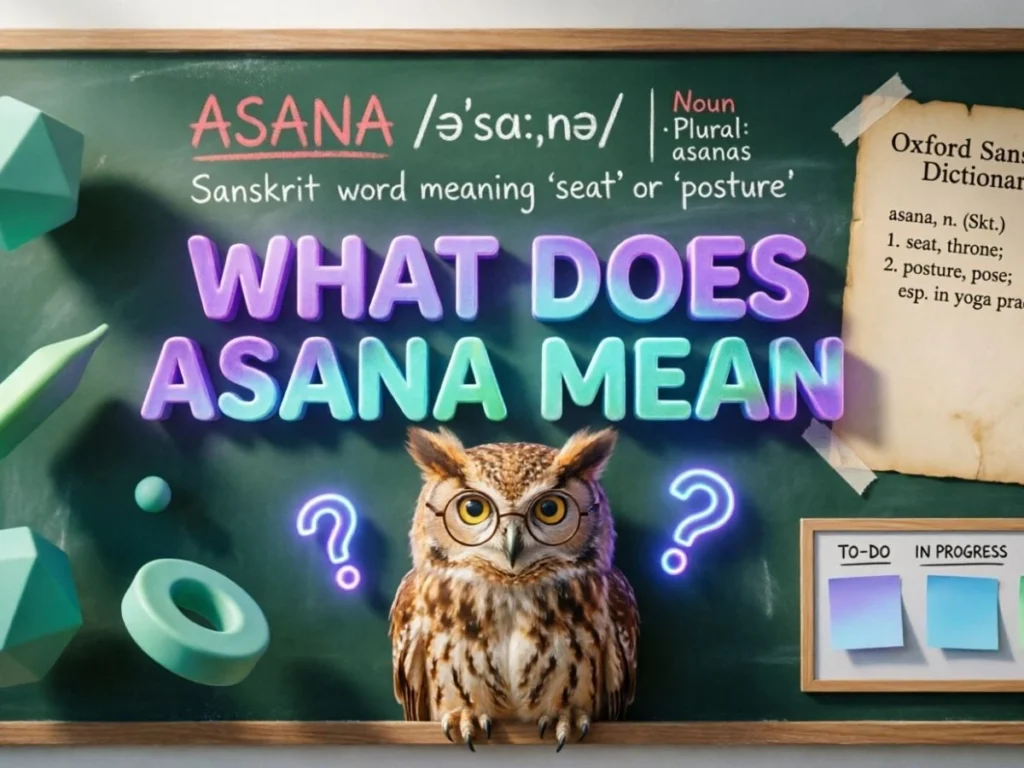
Asana is the name of a project and work management platform. In English writing, Asana functions as a proper noun because it identifies a specific software product.
It is not a grammar alternative to “Trello,” nor is either word a spelling variation of the other. When someone searches for “Asana or Trello,” they are usually asking which project management application is more suitable for their needs.
Asana is designed to help users organize work into projects and tasks. Depending on the workflow, teams can use different ways to view and manage their work.
Examples With Asana
- Our marketing team tracks the campaign in Asana.
- I created a new project in Asana for the website redesign.
- The manager assigned the task to me in Asana.
- We use Asana to monitor deadlines and responsibilities.
- The development team organizes its sprint work in Asana.
How to Pronounce Asana
Asana is commonly pronounced approximately as:
uh SAH nuh
The emphasis falls on the middle syllable.
What Does Trello Mean?
Trello is the name of a project and task management application built around visual boards, lists, and cards.
Like Asana, Trello is a proper name, so it should normally appear with a capital T when referring to the software.
Trello’s visual card based structure makes it particularly intuitive for people who like to see tasks arranged by status. For example, a board might contain lists such as To Do, In Progress, and Done.
Examples With Trello
- We track our content calendar in Trello.
- Please move the completed card to the Done list in Trello.
- I created a Trello board for our new project.
- The team uses Trello to organize weekly assignments.
- She added the research task to our Trello board.
How to Pronounce Trello
Trello is commonly pronounced approximately as:
TRELL oh
The first syllable receives the main stress.
Asana vs. Trello: What Is the Main Difference?
The biggest difference between Asana and Trello is their approach to organizing work.
- Asana emphasizes structured project and work management.
- Trello emphasizes simple visual organization through boards and cards.
- Asana is generally better suited to projects involving many interconnected tasks.
- Trello works particularly well when a team wants a simple visual workflow.
- Asana provides several ways to visualize and organize project information.
- Trello centers its experience around boards, lists, and cards.
- Asana can accommodate detailed project structures.
- Trello can be easier for beginners to understand immediately.
- Both platforms can support team collaboration and workflow automation.
- Neither platform is universally better; the better choice depends on the project’s complexity and the team’s preferred workflow.
A Simple Example
Imagine a small team managing a blog.
With Trello, the workflow could look like:
Ideas → Writing → Editing → Published
Each article becomes a card that moves from one list to another.
With Asana, the same content project could be organized around individual tasks, subtasks, owners, deadlines, dependencies, and different project views.
Both approaches can work. The difference is how much structure you need.
Grammar and Usage Rules for “Asana or Trello”

Although the phrase “Asana or Trello” looks like a typical “X or Y” word comparison search, these are software product names, not competing English words.
That distinction matters.
1. Capitalize Both Names
Use:
Asana or Trello
Not:
asana or trello
When referring specifically to the software products, both names should be capitalized because they are proper names.
2. Use “or” for a Choice
The word or is a coordinating conjunction commonly used to connect alternatives.
For example:
Should we use Asana or Trello?
Here, or presents two alternatives.
3. Use “and” When Referring to Both
If you are discussing both platforms together, use and:
Asana and Trello are popular project management tools.
Do not use or when you mean that both products are being discussed collectively.
4. Use “or” When Asking for a Preference
For example:
Which is better for our team, Asana or Trello?
The question asks the reader to compare two alternatives.
5. Use the Product Names Consistently
Avoid unnecessary variations such as:
Asana app platform software tool
A natural sentence is simply:
Our team uses Asana to manage projects.
When Should You Use Asana?
Asana can be a strong choice when your work involves several layers of organization.
Academic Work
Students and academic teams can use Asana to organize:
- Research tasks
- Group assignments
- Presentation preparation
- Project deadlines
- Individual responsibilities
For example:
Our research group uses Asana to divide the project into smaller tasks.
Professional Work
Asana can work well for teams that manage ongoing projects with multiple contributors.
For example:
The operations team uses Asana to coordinate tasks across departments.
Formal Workflows
Organizations with defined processes may benefit from a system that lets them structure projects, responsibilities, deadlines, and related work.
Business Projects
Asana can be useful for projects such as:
- Product launches
- Marketing campaigns
- Website development
- Event planning
- Business operations
- Content production
Email and Communication
You might mention Asana in an email like this:
Please check Asana for your assigned tasks before the meeting.
When Should You Use Trello?
Trello can be particularly useful when you want a straightforward visual representation of your work.
Academic Work
A student might create lists such as:
Research → Draft → Review → Submitted
Each assignment can become a card.
Professional Work
Small teams can use Trello to visualize the progress of projects without introducing a complicated workflow.
For example:
Please move the task to “Done” after you finish it.
Business Writing
Trello can work well for teams managing content, customer requests, editorial calendars, or straightforward workflows.
Daily Organization
Individuals can also use Trello for:
- Personal to do lists
- Study plans
- Content ideas
- Household projects
- Travel planning
- Weekly goals
Email and Communication
For example:
I have added the new assignment to our Trello board.
Asana or Trello for Academic Writing
Both platforms can help students organize academic projects, but the ideal choice depends on the assignment.
For a straightforward group assignment, Trello’s visual board can make responsibilities easy to understand.
For a larger research project involving multiple stages, deadlines, subtasks, and dependencies, Asana may provide a more structured environment.
Example
A student team preparing a presentation might use Trello like this:
Ideas → Research → Slides → Review → Complete
A more complicated research project might benefit from Asana’s ability to organize individual tasks and related project information.
Asana or Trello for Professional Writing
In professional environments, the choice often depends on workflow complexity.
Trello is attractive when employees want a quick visual overview of what needs to happen next.
Asana can be more suitable when a project requires more detailed planning, multiple responsibilities, and interconnected work.
For example:
The design team uses Trello to track creative requests.
Compared with:
The product team uses Asana to coordinate research, design, development, testing, and launch tasks.
Neither sentence is grammatically better. The difference lies in the type of workflow being described.
Asana or Trello in Formal English
When writing formally, capitalize both names:
The organization uses Asana to coordinate cross functional projects.
The department uses Trello to manage its editorial workflow.
If you are comparing the products, write:
The team is deciding between Asana and Trello.
Avoid lowercase forms when the names refer specifically to the branded software:
The team is deciding between asana and trello.
The corrected version is:
The team is deciding between Asana and Trello.
Common Mistakes With Asana or Trello
Mistake 1: Treating Them as Spelling Variations
Incorrect assumption:
“Asana” and “Trello” are two ways to spell the same thing.
They are not. They are separate software product names.
Mistake 2: Lowercasing the Brand Names
Less appropriate:
We use asana for project management.
Better:
We use Asana for project management.
Mistake 3: Using “and” When Asking for an Alternative
Less appropriate:
Should we choose Asana and Trello?
If you are asking someone to choose between the two, use or:
Should we choose Asana or Trello?
Mistake 4: Assuming One Is Always Better
There is no universal winner.
A simple workflow may favor Trello, while a complex project may favor Asana.
Mistake 5: Confusing “Tool” With “Word”
Because searches such as “affect or effect” and “your or you are” are common grammar questions, some readers may initially assume Asana or Trello is another spelling comparison.
It is not.
The phrase compares two software platforms.
20 Original Examples of Asana or Trello in Context
- School: Our study group uses Trello to organize research assignments.
- School: The students created an Asana project for their semester presentation.
- Workplace: The marketing department tracks campaign tasks in Asana.
- Workplace: Our design team moves completed requests across the Trello board.
- Business: The company uses Asana to coordinate a major product launch.
- Business: The small agency chose Trello because its workflow is highly visual.
- Conversation: “Do you prefer Asana or Trello for team projects?”
- Conversation: “I find Trello easier when I only need a simple task board.”
- Email: Please check Asana before the afternoon meeting.
- Email: I have added the new request to Trello.
- Books: The author described how the team organized its projects using digital tools such as Asana.
- News: The company announced improvements to its work management platform.
- Social Media: Our content team keeps its publishing workflow organized in Trello.
- Everyday English: I put my weekend projects on a Trello board.
- Professional: The project manager reviews task progress in Asana each morning.
- Education: The instructor recommended using a project board to organize group work.
- Business Conversation: “Let is compare Asana and Trello before we choose a platform.”
- Daily Planning: She uses Trello to keep track of errands and personal projects.
- Team Collaboration: The developers receive their assigned work through Asana.
- Project Planning: We evaluated both platforms before selecting the one that matched our workflow.
Easy Memory Trick: Asana vs. Trello
Use this simple association:
Asana = Advanced structure
Think of Asana when you need to manage a project with several layers, responsibilities, and moving parts.
Trello = Tasks on boards
Think of Trello when you picture cards moving between lists on a visual board.
A second shortcut is:
Asana organizes complex work. Trello visualizes simple workflows.
This is not an absolute rule, because both platforms can handle a variety of projects. It is simply a useful starting point when deciding which one fits your needs.
Mini Quiz
1. Which sentence correctly capitalizes the software names?
A. We use asana and trello.
B. We use Asana and Trello.
C. We use Asana and trello.
D. We use asana and Trello.
Answer: B. We use Asana and Trello.
2. Which word correctly shows a choice between the two platforms?
A. and
B. but
C. or
D. because
Answer: C. or
3. Which sentence is correct?
A. Should we use Asana or Trello?
B. Should we use asana or trello?
C. Should we use Asana and Trello?
D. Should we use trello or asana?
Answer: A. Should we use Asana or Trello?
4. Which platform is especially known for its visual board and card approach?
A. Asana
B. Trello
C. Both names refer to the same product
D. Neither
Answer: B. Trello
5. Which statement is most accurate?
A. Asana and Trello are different spellings of one word.
B. Trello is the British spelling of Asana.
C. Asana and Trello are separate software products.
D. Asana is an adjective and Trello is a verb.
Answer: C. Asana and Trello are separate software products.
FAQs
Is Asana or Trello better?
Neither Asana nor Trello is automatically better for everyone. Trello is often a good choice for people who want simple, visual task management using boards, lists, and cards. Asana may be better for teams managing more complex projects that require detailed task organization, structured workflows, dependencies, and broader project planning.
What is the main difference between Asana and Trello?
The main difference is how they organize work. Trello centers on visual boards, lists, and cards, making workflows easy to see at a glance. Asana takes a broader project management approach, allowing teams to organize tasks, subtasks, deadlines, responsibilities, and projects through multiple organizational and viewing options.
Is “Asana or Trello” grammatically correct?
Yes. “Asana or Trello” is grammatically correct when you are comparing the two software products. Both names should be capitalized because they are proper product names. The conjunction or is appropriate when presenting them as alternatives, such as in the question, “Should we use Asana or Trello?”
Should I write Asana and Trello with capital letters?
Yes. When referring to the software products, write Asana and Trello with capital letters. They are brand or product names, so lowercase forms such as “asana” and “trello” are generally inappropriate in polished professional writing when you mean the specific platforms.
Key Takeaways
- Asana and Trello are separate project management and work management products.
- Neither name is a spelling variation of the other.
- Both names should be capitalized when referring to the specific software products.
- Use or when presenting Asana and Trello as alternatives.
- Use and when discussing both platforms together.
- Trello is particularly known for its visual board and card workflow.
- Asana provides a broader approach to structured project and task management.
- Trello can be attractive for simple, visual workflows.
- Asana can be useful for more complex projects and structured team workflows.
- The best choice depends on project complexity, team preferences, and required features.
- “Asana or Trello” is a software comparison, not a traditional grammar or spelling comparison.
Conclusion
The choice between Asana or Trello depends largely on how you want to organize your work. Trello is a strong option when you prefer a simple, visual board based workflow, while Asana is better suited to teams that need more structured project and task management.
From a language perspective, remember that Asana and Trello are separate proper names, so both should be capitalized. Use or when asking someone to choose between them and and when discussing both together.

Jack Ellison is an American author at WordsSign. He writes clear and well-researched articles on symbols, meanings, culture, and spiritual insights.