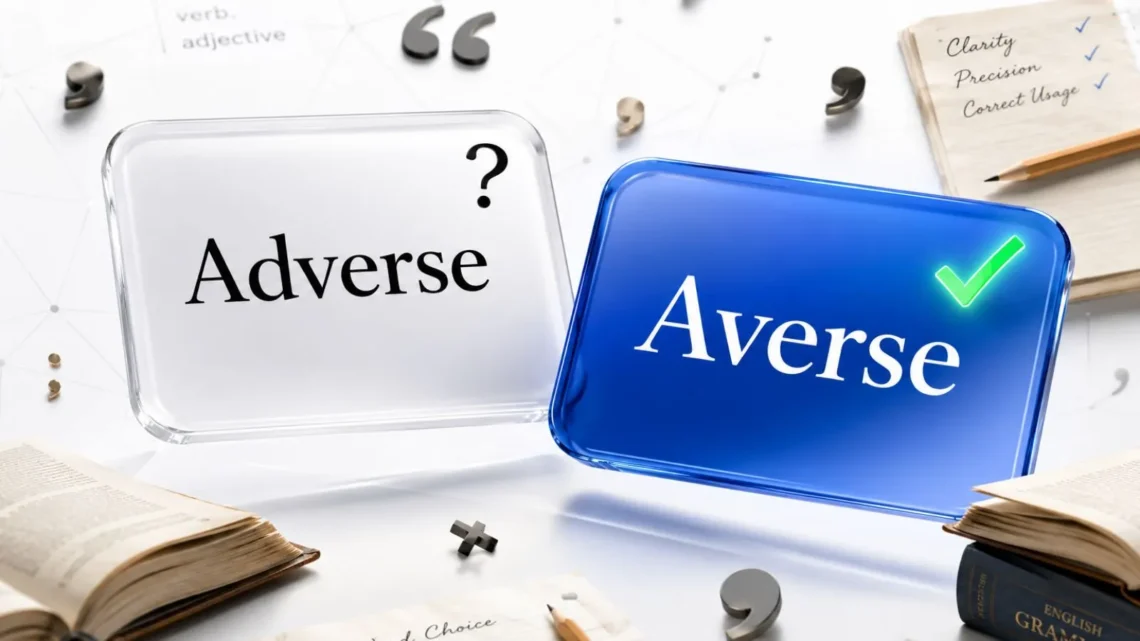
Many writers mix up Adverse or Averse because the words look similar and sound alike, but they have very different meanings.
If you’re wondering which one is correct in your sentence, you are in the right place.
Understanding the difference between adverse and averse can help you avoid common writing mistakes and use each word with confidence.
In this guide, you shall learn what each word means, when to use it, and how to remember the difference with simple grammar tips and real sentence examples.
We shall also cover common errors, proper usage, pronunciation, and practical examples so you can choose the right word every time, whether you’re writing for school, work, or everyday communication.
Quick Answer
Both adverse and averse are correct English words, but they are not interchangeable.
- Adverse = harmful, unfavorable, or negative.
- Averse = unwilling, opposed, or strongly disliking something.
Examples:
- The storm caused adverse weather conditions.
- She is averse to speaking in public.
Adverse vs Averse: Main Difference
| Word | Meaning | Correct? | Best Used For | Example |
| Adverse | Harmful, unfavorable, negative | ✅ Yes | Situations, conditions, effects, outcomes | The company faced adverse market conditions. |
| Averse | Strongly opposed or unwilling | ✅ Yes | People’s feelings, attitudes, preferences | He is averse to taking unnecessary risks. |
What Does Adverse Mean?
Adverse means harmful, unfavorable, or having a negative effect. It usually describes situations, events, conditions, or results.
Examples
- Heavy rain created adverse driving conditions.
- The medicine had adverse side effects.
- The business suffered adverse economic changes.
- Bad weather had an adverse impact on the event.
- They prepared for any adverse circumstances.
Tip: You can often replace adverse with negative, harmful, or unfavorable.
What Does Averse Mean?
Averse means strongly opposed to something or unwilling to do it. It describes a person’s attitude or feeling.
It is commonly followed by to.
Examples
- She is averse to conflict.
- I’m averse to wasting time.
- Many people are averse to change.
- He is averse to taking unnecessary risks.
- They are averse to borrowing money.
Why People Confuse It
People confuse averse with adverse because the words are spelled similarly and have similar pronunciation. However, averse refers to people’s feelings, while adverse refers to negative situations or effects.
How to Use Adverse or Averse
Use adverse when talking about something negative or harmful.
Correct:
- The project faced adverse conditions.
- The drug caused adverse reactions.
Incorrect:
- ❌ She is adverse to spicy food.
Correct:
- ✅ She is averse to spicy food.
Use averse when talking about someone’s dislike or unwillingness.
Correct:
- He is averse to public speaking.
- They are averse to taking risks.
Incorrect:
- ❌ The company experienced averse weather.
Correct:
- ✅ The company experienced adverse weather.
Where to Use Adverse or Averse
Both words are suitable for many types of writing.
School Writing
- Use adverse for harmful effects or conditions.
- Use averse for opinions or attitudes.
Formal Writing
Both words are common in reports, essays, and academic writing.
Emails
Use whichever word matches your meaning.
- We experienced adverse weather.
- I am averse to making changes without approval.
Everyday Conversation
People often use averse when talking about personal preferences.
- I’m averse to horror movies.
Messages
Both words work naturally.
- Traffic was adverse today.
- I’m averse to eating very spicy food.
Professional Communication
These words are common in business, law, medicine, and finance.
- Adverse market conditions.
- Adverse effects.
- Averse to risk.
Why People Get Confused
There are several reasons people mix up these words:
- They have very similar spelling.
- They sound somewhat alike.
- Both are commonly used in formal English.
- People remember the words but forget which meaning belongs to which one.
The easiest way to avoid mistakes is to remember:
- Adverse describes bad situations.
- Averse describes people who dislike something.
Common Mistakes to Avoid
Wrong:
She is adverse to seafood.
Correct:
She is averse to seafood.
Explanation: A person’s dislike requires averse.
Wrong:
The country experienced averse weather.
Correct:
The country experienced adverse weather.
Explanation: Weather conditions are adverse, not averse.
Wrong:
The medicine made him averse effects.
Correct:
The medicine caused adverse effects.
Explanation: Harmful effects are adverse effects.
Wrong:
I am adverse to waking up early.
Correct:
I am averse to waking up early.
Explanation: Personal unwillingness uses averse.
Real-Life Examples
Meeting
- The team discussed the adverse impact of budget cuts.
- The manager was averse to delaying the project.
School
- Adverse weather closed the school.
- Some students are averse to group presentations.
Travel
- Flights were delayed because of adverse weather.
- My friend is averse to long bus journeys.
Work
- The company faced adverse market conditions.
- She is averse to unnecessary meetings.
Message
- We had adverse road conditions today.
- I’m averse to eating late at night.
Conversation
- The storm had an adverse effect on the crops.
- He’s averse to trying new foods.
Easy Trick to Remember
Think of it this way:
- Adverse = Bad events.
- Averse = Avoiding something.
If it’s about negative conditions, choose adverse.
If it’s about a person’s dislike, choose averse.
Mini Quiz
1. Which word means “harmful”?
Answer: Adverse
2. Which word describes someone who dislikes something?
Answer: Averse
3. Which sentence is correct?
A. She is adverse to coffee.
B. She is averse to coffee.
Answer: B
4. Which sentence is correct?
A. The town experienced adverse weather.
B. The town experienced averse weather.
Answer: A
5. Complete the sentence:
He is ________ to taking unnecessary risks.
Answer: Averse
0
6. Complete the sentence:
The new law had ________ effects on small businesses.
Answer: Adverse
Related Confusing Words
- affect or effect
- your or You are
- its or it’s
- there or their
- accept or except
- compliment or complement
- farther or further
- assure or ensure
FAQs
Is adverse a correct word?
Yes. Adverse means harmful, unfavorable, or negative.
Is averse a correct word?
Yes. Averse means strongly opposed or unwilling.
What is the difference between adverse and averse?
Adverse describes negative situations or effects, while averse describes a person’s dislike or unwillingness.
Which one should I use?
Use adverse for harmful conditions and averse for personal attitudes or preferences.
Are adverse and averse formal words?
Yes. Both are common in formal writing, but they also appear in everyday English.
Conclusion
Both adverse and averse are correct, but they mean different things.
Use adverse when talking about harmful or unfavorable conditions.
Use averse when describing someone who dislikes or avoids something.
Remember this simple rule, and you’ll choose the right word with confidence every time.
Read More Post
- Yae or Nae: Which Word Is Correct to Use(2026)?
- Lightning or Lightening: Which Word Is Correct?
- Mater or Matter: Which Word Is Correct to Use(2026)?

Jack Ellison is an American author at WordsSign. He writes clear and well-researched articles on symbols, meanings, culture, and spiritual insights.