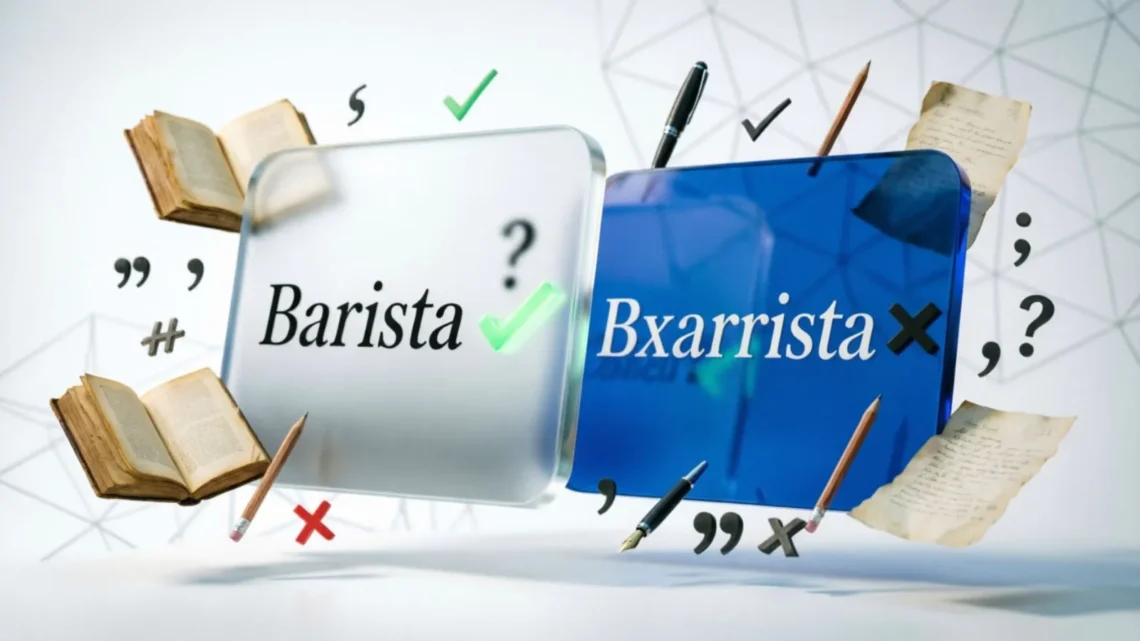
Many people wonder If Barista or Barrista is the correct spelling when writing about someone who prepares and serves coffee.
If you have been confused by this common spelling mistake, this guide will help you understand the correct usage, meaning, and difference between the two forms.
You will learn why barista is the accepted spelling in English, how barrista became a common error, and how to use the word properly in everyday writing.
With clear examples and simple explanations, this article will help you avoid common spelling mistakes and feel more confident using this coffee related term in your English communication.
Quick Answer
Barista is the correct spelling.
Barrista is incorrect and should be avoided in writing.
Examples:
- ✅ The barista made a delicious cappuccino.
- ❌ The barrista made a delicious cappuccino.
Barista vs Barrista: Main Difference
| Word/Phrase | Meaning | Correct? | Best Used For | Example |
| Barista | A person who prepares and serves coffee drinks, especially in a café | ✅ Yes | Everyday, academic, and professional writing | The barista recommended a new latte. |
| Barrista | A misspelling of barista | ❌ No | Not recommended | ❌ She works as a barrista. |
What Does Barista Mean?
A barista is someone who prepares and serves coffee-based drinks, such as espresso, cappuccino, latte, and mocha. Most baristas work in coffee shops or cafés and often help customers choose drinks.
Example Sentences
- The barista greeted every customer with a smile.
- I asked the barista to make my coffee extra hot.
- My friend works as a barista at a local café.
- The barista created beautiful latte art.
- The experienced barista suggested a new coffee blend.
What Does Barrista Mean?
Barrista does not have a separate meaning in English. It is simply a spelling mistake of barista.
People often write barrista because the pronunciation may make it seem like there should be two “r” letters. However, dictionaries and standard English use only barista.
Incorrect Examples
- ❌ She is a talented barrista.
- ❌ The barrista served our drinks.
- ❌ I want to become a barrista.
- ❌ The café hired a new barrista.
- ❌ Ask the barrista for recommendations.
Each sentence should use barista instead.
How to Use Barista or Barrista
Always use barista when referring to someone who prepares and serves coffee.
Simple Rules
- Barista is always correct.
- Barrista should be avoided.
- Use barista in both singular and plural forms.
- The plural is baristas.
Correct Examples
- ✅ The barista made my favorite espresso.
- ✅ The café hired two new baristas.
- ✅ Every barista received customer service training.
Incorrect Examples
- ❌ The barrista made my coffee.
- ❌ We met several friendly barristas.
Where to Use Barista or Barrista
Use barista in every type of writing and conversation.
School Writing
- The barista explained how espresso is made.
Formal Writing
- The café is looking for an experienced barista.
Emails
- We are hiring a full-time barista for our new location.
Everyday Conversation
- The barista remembered my usual order.
Messages
- The barista made an amazing iced latte today.
Professional Communication
- Our new barista starts work next Monday.
American English
Barista is the standard spelling.
British English
Barista is also the standard spelling.
Canada, Australia, New Zealand, India, and Pakistan
English speakers in these countries also use barista. The spelling does not change by region.
Why People Get Confused
There are a few reasons why people write barrista instead of barista.
- The pronunciation can make it sound like there are two “r” letters.
- Many English words contain double letters, so people assume this one does too.
- People often learn the word by hearing it before seeing it written.
- Typing quickly can also lead to the extra “r.”
Common Mistakes to Avoid
Wrong:
The barrista made my coffee.
Correct:
The barista made my coffee.
Explanation: The correct spelling is barista.
Wrong:
She wants to become a barrista.
Correct:
She wants to become a barista.
Explanation: Use the standard spelling in all situations.
Wrong:
Our café hired three barristas.
Correct:
Our café hired three baristas.
Explanation: The plural is baristas.
Real-Life Examples
At Work
The barista prepared coffee for the morning meeting.
At School
My teacher interviewed a local barista about customer service.
While Traveling
The barista recommended a popular local coffee.
In a Message
“The barista made the best caramel latte today!”
During a Conversation
“My cousin works as a barista at a busy coffee shop.”
While Ordering
The barista suggested trying the seasonal drink.
Easy Trick to Remember
Think of bar + ista.
A barista works behind the coffee bar, so remember:
One “r” in bar = One “r” in barista.
Mini Quiz
1. Which spelling is correct?
Answer: Barista
2. Is “barrista” a standard English spelling?
Answer: No.
3. What does a barista do?
Answer: Prepares and serves coffee drinks.
4. Which sentence is correct?
A. The barrista made my latte.
B. The barista made my latte.
Answer: B
5. Is “barista” used in both American and British English?
Answer: Yes.
6. What is the plural of barista?
Answer: Baristas
Related Confusing Words
- gray or grey
- canceled or cancelled
- traveling or travelling
- your or You are
- its or it’s
- affect or effect
- bare with me or bear with me
- there or their
FAQs
Is barista correct?
Yes. Barista is the correct spelling used worldwide.
Is barrista correct?
No. Barrista is a common misspelling.
What is the difference between barista and barrista?
Barista is the correct word. Barrista has no accepted meaning in standard English.
Which one should I use?
Always use barista.
Is barista formal or informal?
It is a standard English job title and is appropriate in both formal and informal writing.
Conclusion
The correct spelling is barista. The spelling barrista is simply a mistake and should not be used. If You are writing a school assignment, sending an email, or talking about your favorite coffee shop, always choose barista. Remember: one “r” is always right.

Jack Ellison is an American author at WordsSign. He writes clear and well-researched articles on symbols, meanings, culture, and spiritual insights.