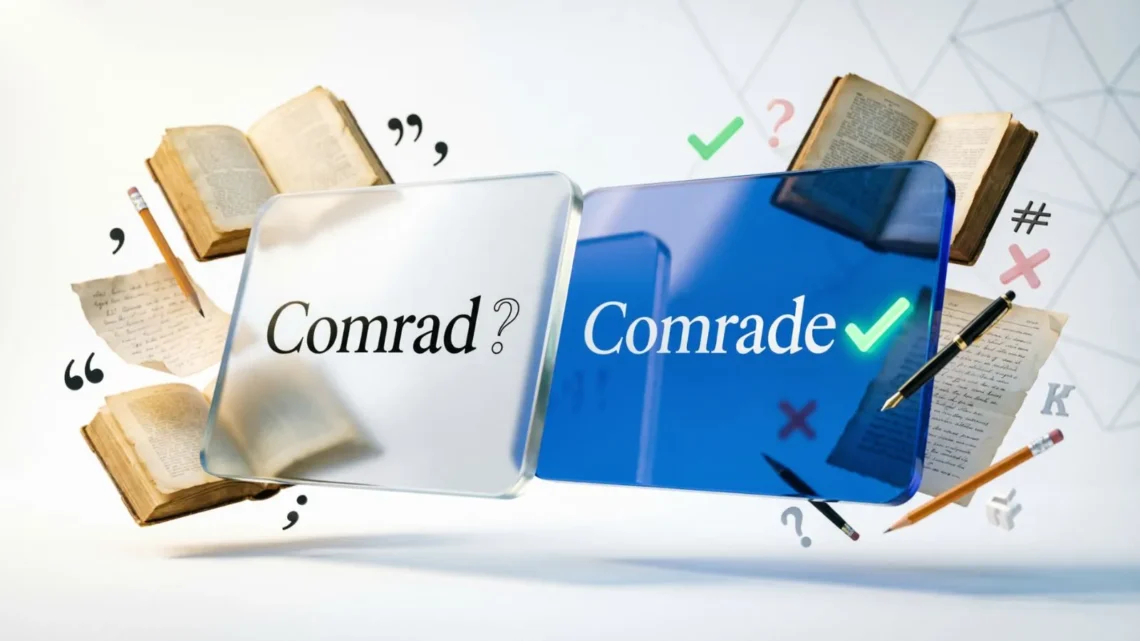
Many people wonder whether Comrad or Comrade is the correct spelling, especially when writing about friendship, politics, history, or the military.
If you have seen both forms, you are not alone—but only one is considered the standard English spelling in most situations.
In this guide, you shall discover which form is correct, whether the other is simply a misspelling or has a valid use, and why the confusion happens.
We shall also explain the meaning, pronunciation, proper usage, and common writing mistakes, along with clear sentence examples that make the difference easy to remember.
By the end, you shall know exactly which word to use and feel more confident using it correctly in everyday writing.
Quick Answer
The correct spelling is comrade.
Comrad is not a standard English word and is considered a spelling mistake.
Examples:
- ✅ She has been my comrade for many years.
- ❌ She has been my comrad for many years.
Comrad vs Comrade: Main Difference
| Word/Phrase | Meaning | Correct? | Best Used For | Example |
| Comrad | Misspelling of comrade | ❌ No | Avoid using it | ❌ He is my comrad. |
| Comrade | A friend, companion, teammate, or fellow member of a group | ✅ Yes | Writing, speech, literature, history, and conversation | ✅ He is my comrade. |
What Does Comrad Mean?
Comrad has no accepted meaning in standard English.
It is simply a spelling mistake of comrade. People usually write it because they forget the final “e”.
Incorrect Examples
- ❌ He is my comrad.
- ❌ Every comrad helped during the project.
- ❌ She called me her comrad.
- ❌ Our comrad won the award.
- ❌ I met an old comrad yesterday.
Always replace comrad with comrade.
What Does Comrade Mean?
A comrade is someone who shares an experience, goal, job, or group with another person. It often means a trusted friend, teammate, or companion.
The word can also refer to fellow soldiers, classmates, coworkers, or members of an organization.
Examples
- She is my closest comrade at school.
- The soldiers protected their comrades during the mission.
- My hiking comrade planned the entire trip.
- We have been comrades since college.
- Every comrade worked together to finish the project.
How to Use Comrad or Comrade
Always use comrade in both writing and speaking.
Use comrade when referring to:
- a close friend
- a teammate
- a fellow soldier
- a coworker
- a member of the same group
Avoid comrad because it is incorrect.
Correct:
- ✅ My comrade helped me prepare for the exam.
- ✅ She greeted her comrades warmly.
Incorrect:
- ❌ My comrad helped me prepare.
- ❌ We thanked our comrads.
Where to Use Comrad or Comrade
Use comrade in every type of communication.
School Writing
- My comrade assisted me with the science project.
Formal Writing
- The officer praised his comrades for their bravery.
Emails
- Thank you, comrade, for your support.
Everyday Conversation
- He has been my comrade since childhood.
Messages
- You are a great comrade!
Professional Communication
- Every team member treated each other like trusted comrades.
Regional Usage
American English: Uses comrade.
British English: Uses comrade.
Canada, Australia, New Zealand, India, and Pakistan: Also use comrade.
There is no regional spelling called comrad.
Why People Get Confused
People commonly confuse these words because:
- the final “e” is easy to forget
- the word sounds almost the same without the final letter
- fast typing causes spelling mistakes
- many learners write words the way they hear them
The pronunciation stays almost the same, but the spelling must include the final “e.”
Common Mistakes to Avoid
Wrong:
He is my comrad.
Correct:
He is my comrade.
Explanation: Comrad is a misspelling.
Wrong:
Our comrads worked together.
Correct:
Our comrades worked together.
Explanation: The plural form is comrades.
Wrong:
She thanked every comrad.
Correct:
She thanked every comrade.
Explanation: Always keep the final “e.”
Wrong:
I met an old comrad yesterday.
Correct:
I met an old comrade yesterday.
Explanation: Use the correct dictionary spelling.
Real-Life Examples
Meeting
I am happy to introduce my longtime comrade.
School
My comrade shared his notes before the exam.
Travel
I traveled across Europe with my best comrade.
Work
Every comrade on the team contributed ideas.
Message
Thanks for helping today, comrade!
Conversation
She has always been a loyal comrade.
Social Situation
Old comrades gathered for a reunion after many years.
Easy Trick to Remember
Remember this simple rule:
A true friend deserves the final “E.”
If you are talking about a friend or teammate, always spell it comrade with an E at the end.
Mini Quiz
1. Which spelling is correct?
Answer: Comrade
2. Is comrad a standard English word?
Answer: No.
3. Which sentence is correct?
A. He is my comrad.
B. He is my comrade.
Answer: B
4. What is the plural of comrade?
Answer: Comrades
5. Can comrade refer to a teammate?
Answer: Yes.
6. Should you use comrad in formal writing?
Answer: No.
Related Confusing Words
- gray or grey
- canceled or cancelled
- your or you are
- It is or it is
- affect or effect
- bear with me or bare with me
- there or their
- principal or principle
FAQs
Is comrad correct?
No. Comrad is a misspelling.
Is comrade correct?
Yes. Comrade is the correct English spelling.
What is the difference between comrad and comrade?
Comrade is the correct word. Comrad is simply a spelling error.
Which one should I use?
Always use comrade.
Is comrade formal or informal?
It can be used in both formal and informal situations, depending on the context.
Conclusion
The correct spelling is comrade. The word comrad is not accepted in standard English and should be avoided.
If you are writing about a friend, teammate, coworker, or fellow soldier, always use comrade. Remember to keep the final “e” to ensure your spelling is correct.

Jack Ellison is an American author at WordsSign. He writes clear and well-researched articles on symbols, meanings, culture, and spiritual insights.