If you have ever hesitated over organizing or organising, you are not alone.
Both spellings are correct, but they belong to different varieties of English.
The main difference is if you are following American or British English spelling conventions, which can make the choice confusing when writing for an international audience.
In this guide, you shall learn which form to use, when each spelling is appropriate, and why the two versions differ.
We shall also look at the relevant spelling rule, practical sentence examples, and common mistakes to avoid.
If you are writing an email, academic paper, website content, or everyday message, understanding the proper usage of organizing or organising will help you choose the right form confidently and keep your English consistent.
Featured Snippet: Quick Answer
Organizing is the preferred spelling in American English, while organising is preferred in British English. Both words mean arranging, planning, or putting things into an orderly system. The difference is simply a regional spelling convention: American English generally uses ize, whereas British English commonly uses ise.
Organizing vs Organising: Comparison Table
| Feature | Organizing | Organising |
| Correct Word | Yes | Yes |
| Incorrect Word | Not incorrect | Not incorrect |
| Meaning | Arranging or putting things in order | Arranging or putting things in order |
| Definition | The present participle or gerund of “organize” | The present participle or gerund of “organise” |
| Part of Speech | Verb form / gerund | Verb form / gerund |
| Grammar Rule | Uses the American spelling organize | Uses the British spelling organise |
| Correct Usage | Preferred in American English | Preferred in British English |
| Incorrect Usage | Not preferred in standard American English | Not preferred in standard British English |
| Pronunciation | /ˈɔːrɡənaɪzɪŋ/ | /ˈɔːɡənaɪzɪŋ/ |
| Common Mistake | Using British spelling in American writing | Using American spelling in British writing |
| Memory Tip | Z = American: organize → organizing | S = British: organise → organising |
| Example | “She is organizing the meeting.” | “She is organising the meeting.” |
What Does “Organizing” Mean?
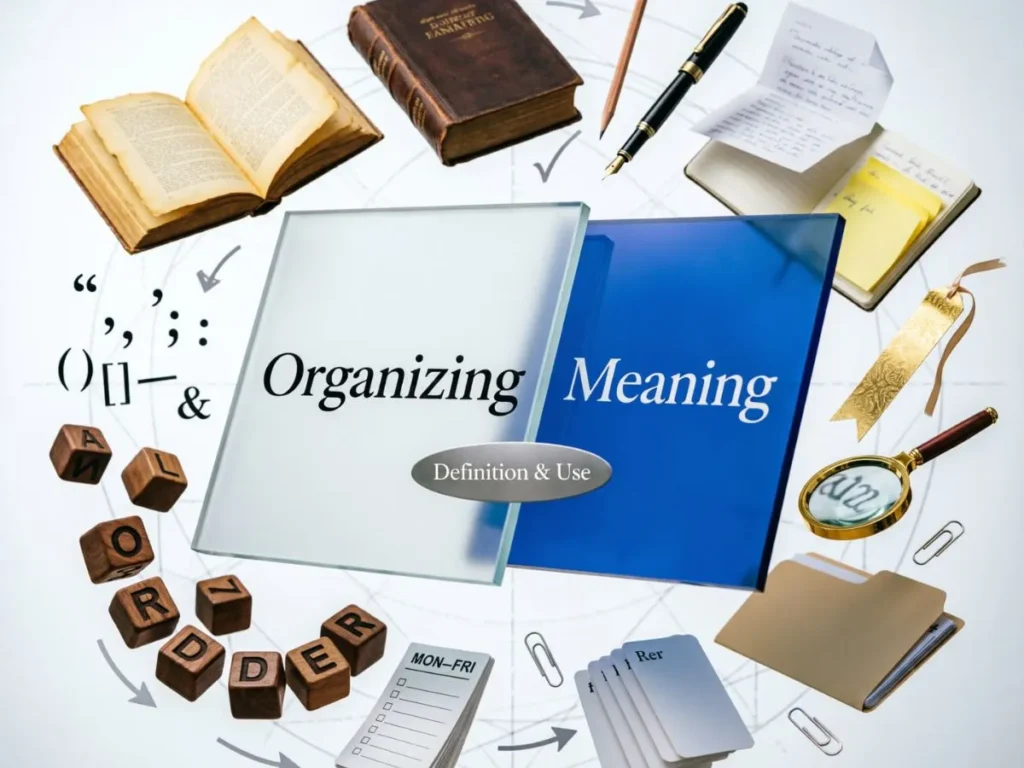
Organizing is the standard American English spelling of the present participle of organize.
The verb organize means to arrange people, objects, information, activities, or ideas in a structured and effective way. It can also mean planning an event or coordinating an activity.
For example:
- She is organizing the files on her computer.
- We are organizing a meeting for next Friday.
- He spent the morning organizing his notes.
- The teacher is organizing the students into small groups.
- I am organizing my schedule for next week.
Grammar Role of “Organizing”
Organizing can function in several grammatical ways.
As a present participle, it can appear with a form of be to create a continuous verb tense:
She is organizing the conference.
Here, organizing is the present continuous tense.
It can also function as a gerund:
Organizing your workspace can save time.
In this sentence, organizing acts as a noun because it names an activity.
The spelling follows the American English verb organize:
organize → organizing
The final e is dropped before adding ing.
What Does “Organising” Mean?
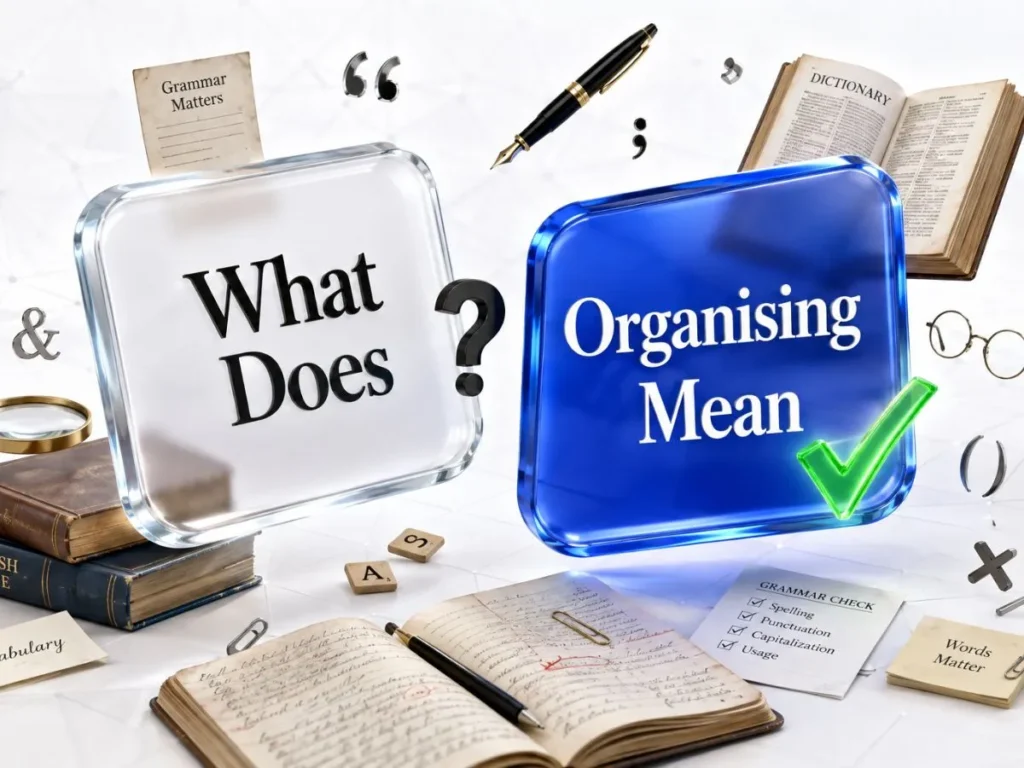
Organising is the standard British English spelling of the same word.
It has exactly the same meaning and grammatical function as organizing. The only difference is the spelling of the base verb:
organise → organising
Examples include:
- She is organising the conference.
- They are organising a charity event.
- He enjoys organising his collection of books.
- The staff are organising the annual celebration.
- She spent the afternoon organising her documents.
The spelling organising is particularly common in British English and is also used in several other English varieties that traditionally follow British spelling conventions.
What Is the Main Difference Between Organizing and Organising?
The main difference is regional spelling, not meaning.
- Organizing is the preferred form in American English.
- Organising is the preferred form in British English.
- Both forms are grammatically correct.
- Both forms have the same pronunciation and meaning.
- The difference comes from the spelling of the base verb: organize vs. organise.
- You should generally choose one spelling system and use it consistently throughout a document.
Simple Comparison
American English: organize → organizing
British English: organise → organising
So, if you are writing for an American audience, choose organizing. If you are following British English conventions, choose organising.
Organizing or Organising: Which One Should You Use?
The best choice depends on your target variety of English.
Use “Organizing” in American English
Use organizing when following standard American English spelling.
Examples:
- The students are organizing a fundraiser.
- She is organizing the company’s records.
- We are organizing a training session.
- He is organizing his travel plans.
American English generally favors ize spellings in words such as:
- organize
- realize
- recognize
- apologize
- centralize
Therefore:
organize → organizing
Use “Organising” in British English
Use organising when following standard British English conventions.
Examples:
- The students are organising a fundraiser.
- She is organising the company’s records.
- We are organising a training session.
- He is organising his travel plans.
British English commonly uses ise spellings:
- organise
- realise
- recognise
- apologise
- centralise
Therefore:
organise → organising
Why Do American and British English Spell It Differently?
The difference reflects broader spelling conventions that developed between varieties of English.
American English generally prefers ize in many words of this type, whereas British English traditionally allows or commonly uses ise.
This produces pairs such as:
| American English | British English |
| organize | organise |
| organizing | organising |
| recognize | recognise |
| recognizing | recognising |
| realize | realise |
| realizing | realising |
| apologize | apologise |
| apologizing | apologising |
Importantly, this does not mean that one form is universally correct and the other is universally wrong. English has several established regional standards.
Is “Organising” Wrong in American English?
In standard American English, organizing is the expected spelling. Organising may be understood without difficulty, but it follows a British style spelling convention rather than the usual American convention.
For American academic, professional, business, and general writing, use:
The department is organizing a conference.
Rather than:
The department is organising a conference.
The second version is understandable, but organizing is the conventional American form.
Is “Organizing” Wrong in British English?
Not necessarily, but organising is the conventional spelling in British English.
If you are writing according to British spelling conventions, consistency matters. A document using mostly British forms should normally use:
The committee is organising the event.
rather than switching unexpectedly to:
The committee is organizing the event.
The American form may appear in British contexts, particularly in international businesses, digital publications, software, or organizations that follow American style, but organising remains the traditional British spelling.
Grammar Rule: Organize + ing
The spelling changes slightly when organize or organise takes the ing ending.
American English
organize + ing → organizing
The final e is removed:
organize → organizing
British English
organise + ing → organising
Again, the final e is removed:
organise → organising
The same spelling principle applies to many verbs ending in silent e:
- make → making
- write → writing
- use → using
- create → creating
- organize → organizing
- organise → organising
The important point is that the regional difference occurs in the base verb. Once the final e is removed, the distinction remains in the letter immediately before the ing ending:
organizing versus organising.
When Should You Use “Organizing”?
Academic Writing
Use organizing in American academic writing.
The researcher is organizing the data into three categories.
When writing an essay, research paper, thesis, or report for an American institution, maintain American spelling consistently.
Professional Writing
Use organizing in American workplace communication.
I am organizing the documents before the meeting.
Formal English
Formal American English uses organizing just as informal American English does. The spelling does not change according to formality.
Informal English
You can also use organizing in everyday American conversation and informal writing.
I am organizing my room this weekend.
Business Writing
American businesses generally use organizing when following American English style.
Our team is organizing a customer appreciation event.
Emails
An American English email might say:
We are organizing a call to discuss the project timeline.
Daily Conversation
In ordinary American speech and writing:
I am organizing everything for the trip.
When Should You Use “Organising”?
Academic Writing
Use organising in British academic writing.
The study examines how students are organising their research materials.
Professional Writing
British workplace communication commonly uses organising.
We are organising the files before the audit.
Formal English
British formal English generally retains the ise spelling.
Informal English
The same spelling applies in casual British English:
I am organizing my room today.
Business Writing
A British company may write:
We are organising a meeting with our suppliers.
Emails
A British English email could say:
I am organising a meeting for next Tuesday.
Daily Conversation
A British speaker might write:
I am organising everything for the weekend.
Common Mistakes With Organizing and Organising
Mistake 1: Treating One Form as Always Wrong
A common misconception is that either organizing or organising must be incorrect.
That is not true.
Both are established spellings. The appropriate choice depends on the English variety being used.
Mistake 2: Mixing Spelling Systems
A writer might use American spelling in one part of a document and British spelling elsewhere.
For example:
The team is organizing the event and realising that more staff are needed.
This mixes ize and ise conventions.
For polished writing, choose the spelling system appropriate for your audience and use it consistently.
Mistake 3: Writing “Organizing”
The spelling organizing is incorrect.
The final e is removed before ing:
organize → organizing
Not:
organize → organizing
Mistake 4: Adding an Extra “E”
Another incorrect form is:
organisinge
The correct spelling is:
organising
Mistake 5: Assuming Pronunciation Changes
The spelling changes, but the pronunciation does not meaningfully change between organizing and organising.
Both forms are pronounced essentially the same way.
20 Original Examples of Organizing and Organising
- The American university is organizing a workshop on academic writing.
- Sarah is organizing her notes before starting the research paper.
- The manager spent Friday organizing the company’s digital records.
- We are organizing a small dinner for the new employees.
- The students are organizing a charity fundraiser at school.
- He is organizing his bookshelf by subject and author.
- The newspaper reported that volunteers were organizing supplies for the community.
- She posted on social media that she was organizing a neighborhood cleanup.
- The British school is organising a science exhibition next month.
- The committee is organising a meeting with local residents.
- James is organising his travel documents before leaving the country.
- The charity is organising a fundraising campaign for the winter.
- The office staff are organising the annual employee celebration.
- I am organising my schedule so I can finish the project on time.
- The author describes how the characters are organising a peaceful demonstration.
- Our British supplier is organising delivery for the end of the week.
- The teacher is organizing the classroom into smaller discussion groups.
- The company is organizing an online training session for new employees.
- She is organising her photographs into separate albums.
- Good planning makes organizing a large event much easier.
Organizing or Organising in American vs British English
The regional distinction can be summarized simply:
| English Variety | Preferred Form |
| American English | organizing |
| British English | organising |
| Canadian English | Both conventions can appear, depending on style |
| Australian English | organising is commonly used |
| New Zealand English | organising is commonly used |
| International contexts | Follow the organization’s chosen style guide |
There can be variation in countries where both American and British English influence usage. When writing professionally, follow the spelling standard required by your employer, school, publisher, or audience.
A Simple Memory Trick
Remember:
Z = American → organizing
S = British → organising
Think of the base verbs first:
American: organize
British: organise
Then add ing after removing the final e:
organize → organizing
organise → organising
A useful phrase to remember is:
“American uses Z; British uses S.”
This shortcut also helps with related words such as realizing/realising, recognizing/recognising, and apologizing/apologising.
Mini Quiz
1. Which spelling is standard in American English?
A. Organising
B. Organizing
C. Organizing
D. Organising
Answer: C. Organizing
2. Which spelling is commonly preferred in British English?
A. Organizing
B. Organising
C. Organizing
D. Organizing
Answer: B. Organising
3. What is the main difference between the two spellings?
A. Their meanings
B. Their pronunciation
C. Their grammatical roles
D. Their regional spelling conventions
Answer: D. Their regional spelling conventions
4. Which sentence follows standard American English spelling?
A. She is organising the conference.
B. She is organizing the conference.
C. She is organizing the conference.
D. She is organizing the conference.
Answer: C. She is organizing the conference.
5. Which base verb produces “organising”?
A. Organize
B. Organise
C. Organizing
D. Organization
Answer: B. Organise
FAQs
Is organizing or organising correct?
Both organizing and organising are correct English spellings. Organizing is the standard form in American English, while organising is commonly preferred in British English. They have the same meaning, pronunciation, and grammatical function. The only major difference is the regional spelling convention used for the base verb.
Is organizing American or British English?
Organizing is primarily the American English spelling. American English generally uses ize in words such as organize, recognize, and realize. British English commonly uses ise, producing organising, recognising, and realising. Therefore, use organizing when following standard American English conventions.
Is organising British English?
Yes. Organising is the standard British English spelling of the present participle of organise. It is also common in other varieties of English influenced by British spelling conventions, including Australian and New Zealand English. The American equivalent is organizing.
Do organizing and organising have the same meaning?
Yes. Organizing and organising have exactly the same basic meaning: arranging, planning, coordinating, or putting something into an orderly system. They also have the same grammatical function and essentially the same pronunciation. The difference is primarily spelling and reflects regional English conventions.
Why does American English use organizing instead of organising?
American English generally prefers ize spellings in this group of words, so the base verb is organized and its ing form is organizing. British English commonly uses organise, producing organising. The distinction developed through different spelling conventions rather than a difference in meaning.
Should I use organizing or organising in a formal document?
Choose the form that matches your target variety of English. Use organizing for formal American English and organising for formal British English. The most important principle is consistency. Avoid switching between American and British spelling conventions within the same document unless a specific style guide requires it.
Key Takeaways
- Organizing and organising are both correct spellings.
- Organizing is preferred in American English.
- Organising is preferred in British English.
- Both forms mean arranging, planning, or coordinating something.
- Both forms function as the present participle or gerund of their respective verbs.
- American English uses organization.
- British English commonly uses organise.
- The final e is removed before adding ing.
- Do not spell the word organizing or organizing.
- Keep your spelling consistent throughout a document.
- When in doubt, match the spelling style of your intended audience or organization’s style guide.
Conclusion
The choice between organizing or organising is mainly a matter of regional English spelling.
Organizing is the preferred American English form, while organising is the common British English form.
Neither spelling changes the meaning or grammatical function of the word.
For American readers, writers, schools, businesses, and publications, choose organizing.
For British English, organising is the natural choice. Once you remember “Z = American, S = British,” the difference becomes easy to recognize and use correctly.

Alexander Reed is an American author at WordsSign. He writes clear and well-researched articles on symbols, meanings, culture, and spiritual insights.