Choosing between “personalise” and “personalize” can be confusing, especially when you want your writing to follow the correct English spelling.
Both forms are valid, but the preferred spelling depends largely on If you are using British or American English.
In this guide, you shall learn the difference between personalise or personalize, what each spelling means, where each form is commonly used, and which version is appropriate for your audience.
We shall also look at practical sentence examples and common mistakes so you can use the word confidently in everyday writing.
If you are writing an email, website content, academic work, or professional communication, understanding this spelling difference will help you choose the right form and maintain consistent English grammar throughout your writing.
Quick Answer
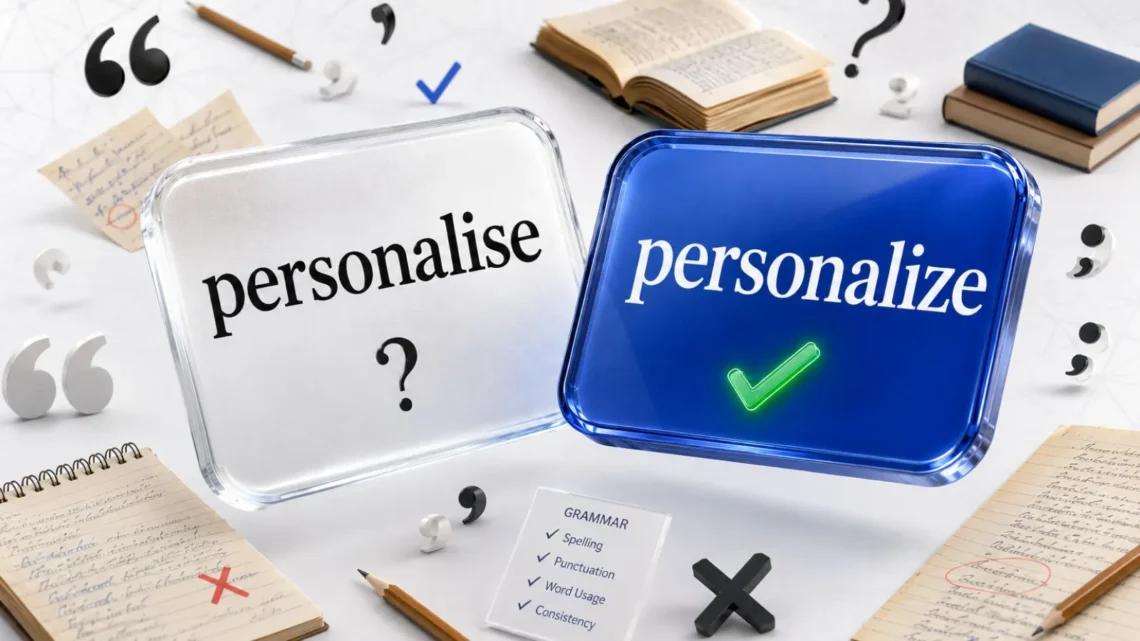
Personalize is the standard spelling in American English, while personalise is the standard spelling in British English and some other English varieties. Both words mean “to make something suited to a particular person.” For US English writing, use personalize, especially in academic, professional, business, and everyday communication.
Personalise vs. Personalize: Comparison Table
| Feature | Personalize | Personalise |
| Correct Word | Personalize | Personalise |
| Incorrect Word | Not incorrect | Not incorrect |
| Main Meaning | To make something suited to an individual | To make something suited to an individual |
| Definition | To adapt something for a particular person | To adapt something for a particular person |
| Part of Speech | Verb | Verb |
| Grammar Rule | Uses ize spelling | Uses ise spelling |
| Main Usage | American English | British English and some other varieties |
| Correct US Usage | Please personalize your profile. | Usually avoid in US English |
| Correct UK Usage | Less common in traditional British spelling | Please personalise your profile. |
| Pronunciation | /ˈpɜːrsənəlaɪz/ | /ˈpɜːsənəlaɪz/ |
| Common Mistake | Assuming personalise is the US spelling | Assuming personalize is always the only correct spelling |
| Memory Tip | US = ize → personalize | UK = ise → personalise |
| Example | The app lets users personalize their settings. | The app lets users personalise their settings. |
Important: Neither spelling is universally “wrong.” The appropriate spelling depends mainly on the variety of English you are using.
What Does “Personalize” Mean?
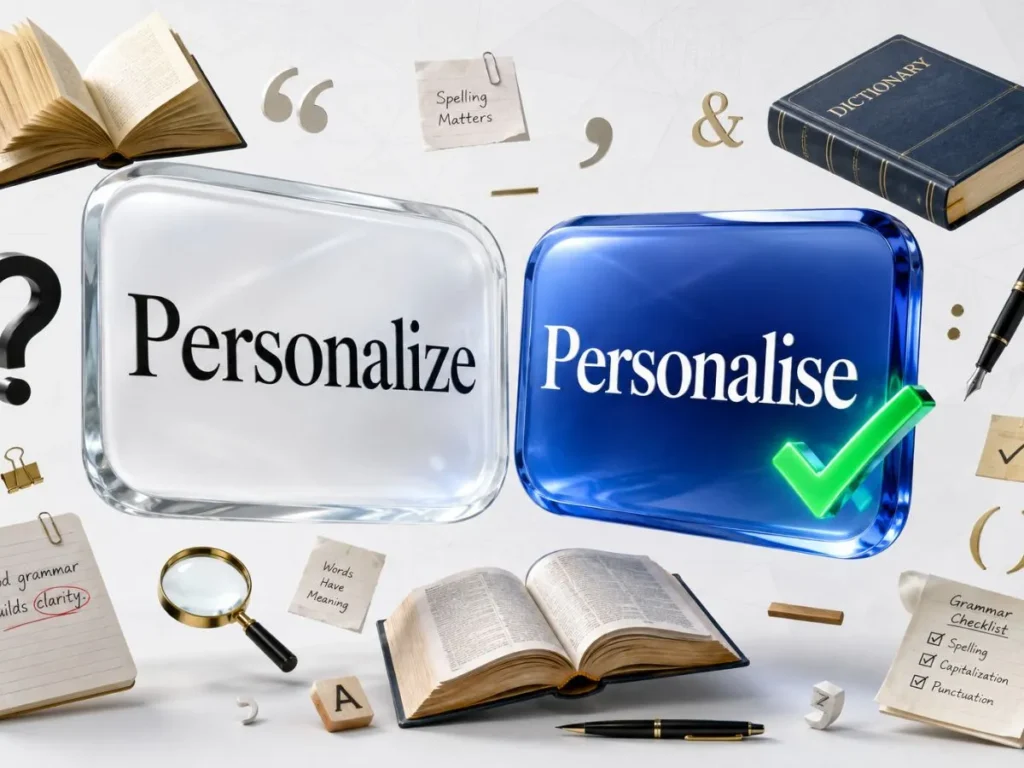
Personalize is a verb meaning to make something more suitable for a particular person by adapting it to that person’s preferences, needs, interests, or characteristics.
In American English, personalize is the preferred spelling.
For example:
- You can personalize your account settings.
- The company allows customers to personalize their products.
- She personalized the invitation with a handwritten message.
- Users can personalize their news feeds.
- We should personalize the presentation for the client.
Grammar Role of “Personalize”
Personalize functions as a verb. It can appear in several grammatical forms:
- Base form: personalize
- Third person singular: personalizes
- Present participle: personalizing
- Simple past: personalized
- Past participle: personalized
Examples:
- I want to personalize my workspace.
- He personalizes every customer email.
- She is personalizing the product page.
- They personalized the invitations.
- The service has personalized the recommendations.
Pronunciation of “Personalize”
In American English, personalize is pronounced approximately:
PUR suh nuh lyze
The final ize sounds like “eyes.”
The word has the same basic pronunciation as personalise. The spelling changes, but the pronunciation generally does not.
What Does “Personalise” Mean?
Personalise has the same meaning as personalize. It means to adapt something for a particular person or make it reflect someone’s individual preferences.
The main difference is spelling rather than meaning.
Personalise is especially associated with British English.
Examples:
- You can personalise your account.
- Customers can personalise their orders.
- She personalised the gift with the recipient’s name.
- The website allows visitors to personalise their experience.
- The teacher personalised the learning materials for each student.
Grammar Role of “Personalise”
Like personalize, personalise is a verb.
Its common forms are:
- Base form: personalise
- Third person singular: personalises
- Present participle: personalising
- Simple past: personalised
- Past participle: personalised
Examples:
- They want to personalise the service.
- The software personalises recommendations.
- She is personalising the invitation.
- We personalised the training materials.
- The system has personalised the user’s experience.
What Is the Main Difference Between Personalise and Personalize?
The primary difference is regional spelling.
- Personalize → preferred in American English
- Personalise → commonly preferred in British English
Both forms have the same meaning, grammatical function, and pronunciation.
For example:
American English:
The website lets customers personalize their profiles.
British English:
The website lets customers personalise their profiles.
Neither sentence is grammatically wrong. Each spelling matches a different English convention.
Key Differences at a Glance
- Personalize is the preferred US English spelling.
- Personalise is commonly used in British English.
- Both words are verbs.
- Both mean to adapt something for an individual.
- Their pronunciation is essentially the same.
- The difference is primarily orthographic, meaning it concerns spelling.
- US writers should generally choose personalize for consistency.
- UK writers commonly choose personalise.
- You should avoid mixing spelling systems within the same piece of formal writing.
Why Does American English Use “Personalize”?
American English commonly favors ize spellings in many words derived from Greek or Latin forms.
This pattern appears in words such as:
- organize
- recognize
- realize
- apologize
- specialize
- standardize
- personalize
British English often uses ise in these words:
- organise
- recognise
- realise
- apologise
- specialise
- standardise
- personalise
This does not mean that every British publication must use ise. British English has spelling variation, and ize forms are also found in some British usage, particularly in styles influenced by international or academic conventions. However, ise remains extremely common in British English.
For American English, ize is the straightforward choice.
Grammar Rules for Personalize and Personalise
The spelling difference does not change the grammatical rules.
Both words are transitive verbs when they take a direct object.
Pattern 1: Personalize + Object
Use the verb to describe adapting something for an individual.
- Personalize your account.
- Personalize the message.
- Personalize the service.
- Personalize the product.
In British spelling:
- Personalise your account.
- Personalise the message.
- Personalise the service.
- Personalise the product.
Pattern 2: Subject + Personalize + Object
A person, business, system, or organization can personalize something.
- The company personalizes its customer service.
- The app personalizes recommendations.
- The teacher personalized the lesson.
- We personalized the proposal.
Pattern 3: Personalize Something for Someone
You can use for when identifying the person who will receive the customized item or service.
- We personalized the presentation for the client.
- She personalized the invitation for her guests.
- The company personalized the package for each customer.
Personalizing and Personalized
The spelling difference continues in related forms:
American English:
- personalize
- personalized
- personalizing
- personalization
British English:
- personalise
- personalised
- personalising
- personalisation
Examples:
- The company offers personalized recommendations.
- The website provides personalization options.
- The service is highly personalised for each customer.
- Users appreciate personalising their profiles.
When Should You Use “Personalize”?
Academic Writing
Use personalize when writing in American English.
For example:
Students can personalize their research dashboards according to their academic interests.
If you are writing for a British institution or publication that follows British spelling, personalise may be more appropriate.
Professional Writing
In US professional communication, use personalize.
We can personalize the training program to meet your team’s needs.
Formal English
Formal writing does not require one spelling over the other. The important point is regional consistency.
For US English:
The organization offers personalized support.
For British English:
The organisation offers personalised support.
Business Writing
American businesses generally use personalize.
Common business phrases include:
- personalize the customer experience
- personalize marketing messages
- personalize recommendations
- personalize product offerings
- personalize communication
Emails
Use personalize in American English emails.
I personalized the proposal based on your team’s requirements.
For British English:
I personalised the proposal based on your team’s requirements.
Daily Conversation
The same regional distinction applies in everyday writing.
An American speaker might write:
I personalized my phone wallpaper.
A British speaker might write:
I personalised my phone wallpaper.
The spoken word sounds essentially the same.
Personalize or Personalise in American English?
For US English, choose personalize.
If your audience is American, use forms such as:
- personalize
- personalized
- personalizing
- personalization
Avoid switching between American and British spellings in the same formal document unless you are intentionally discussing regional language differences.
For example, this is consistent American English:
The company specializes in personalized services and allows customers to personalize every order.
Using specialises or personalised in the same US focused document would introduce British style spellings.
Personalise or Personalize in British English?
For traditional British English, personalise is widely used.
A British style sentence might read:
Customers can personalise their accounts and receive personalised recommendations.
Notice that both related forms use ise/ ised.
However, British English also permits ize spellings in certain style systems and dictionaries. Therefore, it is better to think of personalise as a common British preference rather than declaring personalize universally incorrect in Britain.
Common Mistakes
Mistake 1: Thinking “Personalise” Is Always Wrong
This is incorrect.
Personalise is a legitimate English spelling and is widely used in British English.
Correct:
British websites often allow users to personalise their profiles.
Mistake 2: Thinking “Personalize” Is Only a Spelling Error
It is not.
Personalize is the standard American English spelling.
Correct:
American customers can personalize their profiles.
Mistake 3: Mixing Regional Spellings
A writer may use personalize in one sentence and personalised in another.
For example:
The company personalizes its services and offers personalised recommendations.
For consistent US English, write:
The company personalizes its services and offers personalized recommendations.
Mistake 4: Assuming Pronunciation Changes
The spelling changes, but the pronunciation generally remains the same.
Both forms end with the sound represented by ize.
Mistake 5: Choosing a Spelling Without Considering Your Audience
Your audience matters.
If you are preparing a US business document, personalize is usually the better choice.
If you are preparing traditional British English content, personalise is usually the better choice.
18 Original Examples of Personalize and Personalise
The following examples show how the word works in different contexts. They use the US spelling, personalize, because this article follows American English.
- Students can personalize their online learning dashboards with the subjects they study most.
- The manager asked the sales team to personalize each proposal before sending it to a client.
- I decided to personalize my notebook with my initials.
- The shopping app lets users personalize their recommendations.
- Our teacher encouraged us to personalize our presentations with relevant examples.
- The company plans to personalize its customer support messages.
- You can personalize the notification settings on your phone.
- The author chose to personalize the dedication in every signed copy of the book.
- The news website allows readers to personalize which topics appear on their home pages.
- She wanted to personalize the birthday invitation for each guest.
- The marketing team uses customer preferences to personalize email campaigns.
- We can personalize the training materials for new employees.
- The software allows businesses to personalize their reports.
- He personalized the gift by adding a short message.
- The hotel offered guests several ways to personalize their rooms.
- The teacher personalized the lesson after noticing that several students needed extra practice.
- Many social media platforms let users personalize their profiles.
- The company is personalizing its services to better serve different customer groups.
For British English, replace the relevant ize forms with ise forms where appropriate:
The company is personalising its services to better serve different customer groups.
Personalize vs. Personalisation: Related Forms
Understanding the noun can make the spelling pattern easier to recognize.
In American English:
- personalize = verb
- personalized = past tense/adjective
- personalizing = present participle
- personalization = noun
Examples:
The website lets customers personalize their accounts.
The website offers personalized recommendations.
Customers are personalizing their profiles.
The platform uses personalization to improve the user experience.
In British English, the corresponding forms commonly appear as:
- personalise
- personalised
- personalising
- personalisation
Easy Memory Trick
Think:
American English → Z → personalize
The word personalize contains a Z, just like many common American spellings:
- organize
- realize
- recognize
- specialize
- personalize
For British English, remember:
British English → S → personalise
So if you are writing for a US audience, think:
US = personalize with Z
If you are writing in British English, think:
UK = personalise with S
The most important rule is not to decide that one spelling is always correct. Instead, choose the spelling that matches the English variety you are using.
Mini Quiz
1. Which spelling is preferred in American English?
A. Personalise
B. Personalize
C. Personalisse
D. Personalyze
Answer: B. Personalize
2. Which sentence uses the standard US spelling?
A. The app lets users personalise their profiles.
B. The app lets users personalise their profiles.
C. The app lets users personalize their profiles.
D. The app lets users personalyze their profiles.
Answer: C. The app lets users personalize their profiles.
3. What is the main difference between “personalize” and “personalise”?
A. Their meanings
B. Their pronunciation
C. Their grammatical roles
D. Their regional spelling conventions
Answer: D. Their regional spelling conventions
4. Which spelling is commonly associated with British English?
A. Personalize
B. Personalise
C. Personalyze
D. Personelize
Answer: B. Personalise
5. Which sentence is consistent with American English spelling?
A. The company specialises in personalised services.
B. The company specializes in personalized services.
C. The company specialises in personalized services.
D. The company specialize in personalised services.
Answer: B. The company specializes in personalized services.
FAQs
Is “personalize” or “personalise” correct?
Both personalize and personalise are correct English spellings. Personalize is the standard spelling in American English, while personalise is commonly used in British English and some other varieties. The two words have the same meaning and grammatical function, so the correct choice depends primarily on the variety of English you are writing.
Is “personalize” American or British English?
Personalize is the preferred spelling in American English. British English commonly uses personalise, although ize spellings can also appear in some British style systems. If you are writing specifically for a US audience, personalize is the safest and most consistent choice.
Is “personalise” wrong in American English?
“Personalise” is not a meaningless or misspelled word; it is a legitimate variant used in other English varieties. However, personalize is the standard spelling expected in American English. Therefore, US writers should generally use personalize in professional, academic, business, and formal writing.
Do “personalize” and “personalise” mean the same thing?
Yes. Personalize and personalise have the same basic meaning: to make something more suitable for a particular person or to adapt it according to someone’s preferences. Their main difference is spelling. American English generally uses personalize, while British English commonly uses personalise.
How do you spell “personalize” in American English?
In American English, spell the verb personalize, with a z before the final e. Related forms include personalized, personalizing, and personalization. For example: “Customers can personalize their accounts.” This spelling is consistent with other common US forms such as organize, recognize, and specialize.
Does “personalize” sound different from “personalise”?
Generally, no. Personalize and personalise are normally pronounced the same or nearly the same. The difference is primarily written rather than spoken. Both forms have the final ize sound, similar to the sound at the end of the word “size.”
Key Takeaways
- Personalize is the preferred spelling in American English.
- Personalise is commonly used in British English.
- Both spellings are legitimate English forms.
- Both words mean to adapt something for a particular person.
- Both function as verbs.
- Their pronunciation is essentially the same.
- The difference is mainly regional spelling.
- US writing should generally use personalize.
- British style writing commonly uses personalise.
- Related US forms include personalized, personalizing, and personalization.
- Related British forms include personalised, personalising, and personalisation.
- Consistency is important when choosing between American and British spelling.
Conclusion
When choosing between personalise or personalize, consider your intended variety of English.
For US English, personalize is the standard choice. For British English, personalise is commonly preferred.
Both forms mean “to make something suited to a particular person,” and both function as verbs.
The spelling changes, but the meaning and pronunciation remain essentially the same.
If your writing targets an American audience, remember the simple rule: personalize with Z.

Jack Ellison is an American author at WordsSign. He writes clear and well-researched articles on symbols, meanings, culture, and spiritual insights.